Two Wheel vs Four Wheel Wheelie Bins in Australia
Wheelie bin comparison guide
Two Wheel vs Four Wheel Wheelie Bins in Australia
If you’ve been shopping for wheelie bins, you’ve probably noticed that smaller bins usually have two wheels, while the big commercial ones often have four. That’s not just a design choice. The wheel setup changes how the bin moves, how stable it is, how much it can carry comfortably, and what sort of space you need to store and manoeuvre it.
This guide breaks down the real-world differences, so you can pick the type that suits your setup without guessing.
2Easy through tight spaces
4Stable at higher volumes
The quick answer
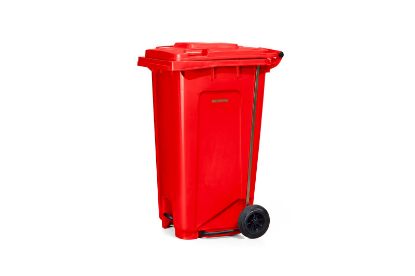
Two-wheel bins are best when you need something easy to move through tight spaces, up and down small ramps, or around a home or small workplace.
The quick answer
Four-wheel bins are best when you need more capacity and stability, especially in shared waste areas, bin rooms, loading docks, and commercial sites.
Two-wheel wheelie bins
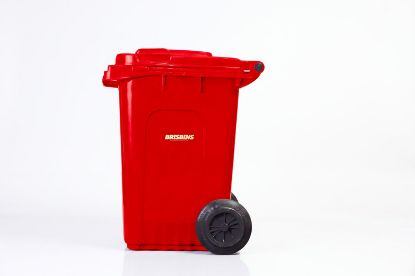
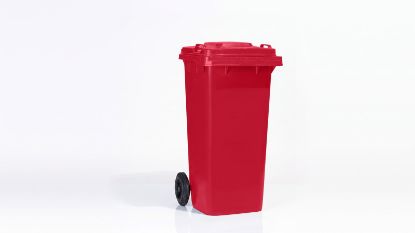
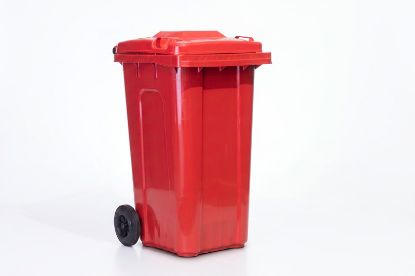
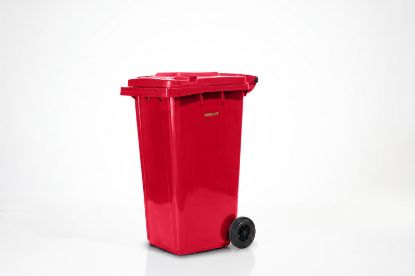
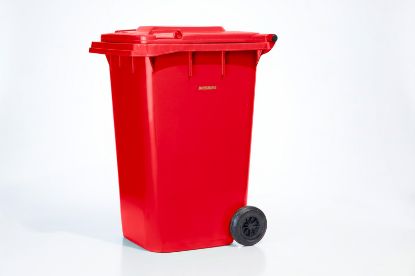
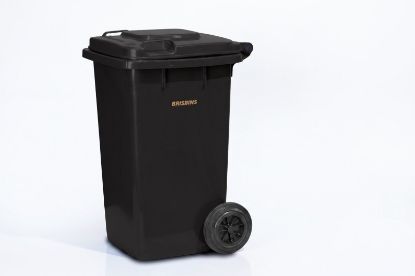
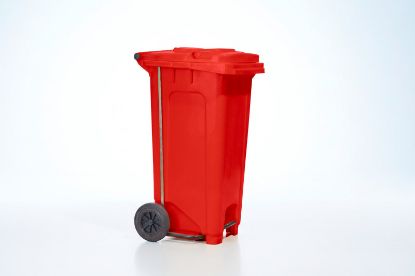
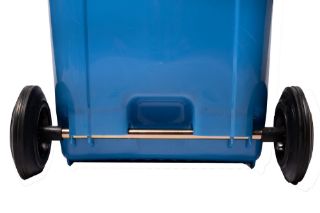
Two-wheel bins are the most common style Australians see day to day, especially around homes. They’re designed to be tipped back and rolled, which is why they work well in places where there’s a clear path to move them.
Best suited for
- Houses and townhouses
- Small businesses and offices
- Schools and childcare rooms
- Smaller waste streams like recycling or organics
- Areas with narrow access, like side gates or corridors
Why people choose two-wheel bins
Easier in tight spotsTwo-wheel bins are generally simpler to get through narrow gates and around corners.
Simple handlingYou tip the bin back and roll it. That’s often easier than pushing a large four-wheel bin that wants to drift on its castors.
Good all-round option for smaller volumesFor most situations up to the typical household and light commercial sizes, two wheels do the job.
Things to watch out for
Stability when overloadedIf a two-wheel bin is packed heavy, it can feel unstable when tipping and rolling, especially on uneven ground.
More effort once you get biggerA full 360L bin can still be manageable, but if you’re regularly moving heavy loads, you might be better off stepping into a four-wheel option.
Four-wheel wheelie bins
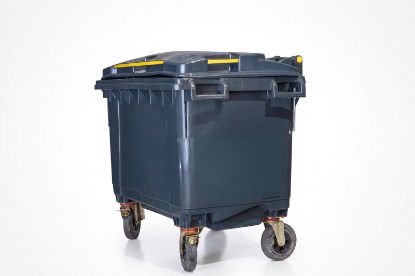
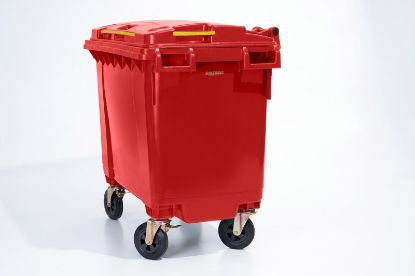
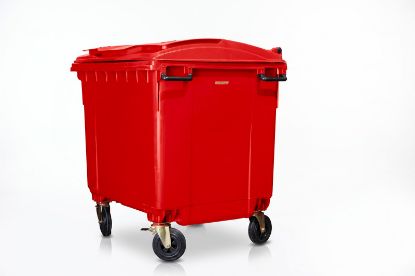
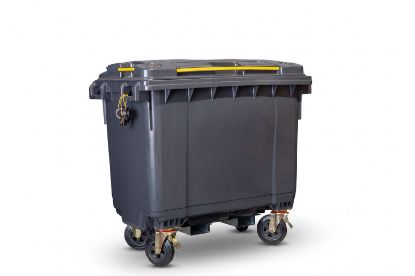
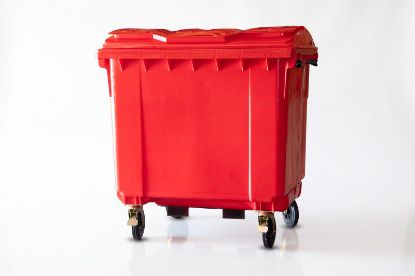
Four-wheel bins are built for larger volumes and shared use. Instead of tipping back to roll, you generally push them like a trolley, and the castors carry the load.
Best suited for
- Apartment buildings and shared bin rooms
- Cafes, restaurants, and busy retail
- Warehouses and industrial sites
- Construction and demolition sites
- Any setup where multiple people use the same bins
- Waste consolidation from smaller bins
Why four-wheel bins make sense
More stableBecause the bin stays upright while you move it, it’s less likely to tip or feel unbalanced.
Better for heavier and bulkier wasteFour-wheel bins handle high volume without the same strain you get tipping a two-wheel bin.
Easier to manoeuvre in open areasIf you’ve got room to turn and push, castor wheels can make moving a large bin surprisingly manageable.
Things to watch out for
They need spaceFour-wheel bins are wider and longer, and they need room to rotate and park. They’re not ideal if you’re squeezing through narrow walkways.
Castors behave differently on slopesOn a slope or uneven surface, a four-wheel bin can roll if it’s not braked or chocked properly. If your bin lives on a driveway, ramp, or loading dock, it’s worth considering bins with braking or locking castors.
Which wheel style suits each size?
This is a practical guide, not a strict rule, but it lines up with how most Australian sites operate:
Usually two-wheel bins. They’re designed to be rolled by one person without needing a big turning circle.
Commonly four-wheel bins. Once the bin gets to this size, stability matters more, and pushing an upright bin is usually easier than tipping a heavy one.
Real-world scenarios (quick examples)
If you’re a household
Two-wheel bins are usually the simplest option. If you’re constantly overflowing a 240L bin, stepping up to 360L might solve it. If you’re still running out of space, it may be time to split waste streams properly, for example one bin for general waste and a separate one for recycling or organics.
If you’re a business
If your bin sits out the back and gets filled daily, a four-wheel bin often saves hassle. It’s stable, holds more, and suits shared use. A lot of businesses move from 240L or 360L bins to 660L when they’re sick of overflow and loose bags beside the bin.
If you’re managing a shared waste area
Four-wheel bins usually make more sense because they’re built for volume and multiple users. The main thing is having enough room for access, storage, and safe movement.
How to decide without overthinking it
If you want a simple decision rule:
- Choose two-wheel if your bin will be moved through tight spaces or across awkward ground.
- Choose four-wheel if you need capacity, stability, and shared use in open areas.
If you’re unsure, it often comes down to space and use case. If you’ve got the space, four-wheel bins can make life easier at higher volumes and for smaller bin waste consolidation in places like schools. If you don’t, a bigger two-wheel option might be the better fit.